 English
 Čeština
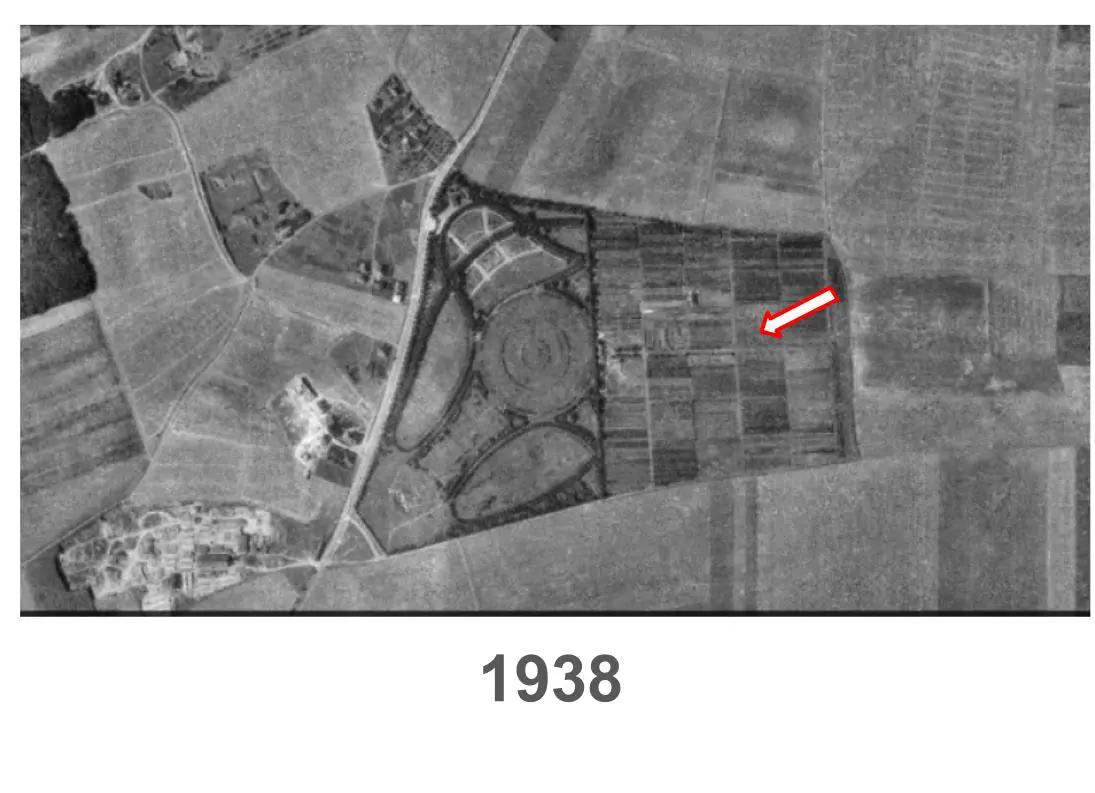
As early as 1894 the Prague municipality managed 27 larger parks covering roughly 50 hectares, at an annual cost of 45,000 gulden. Before the Second World War, the Parks Department of the Prague building authority looked after 380 hectares of public greenery, tended by some 380 staff. One of several nurseries — the supply garden for Prague’s parks, still in existence today — was founded in 1924 at the rear of the Ďáblice Cemetery.
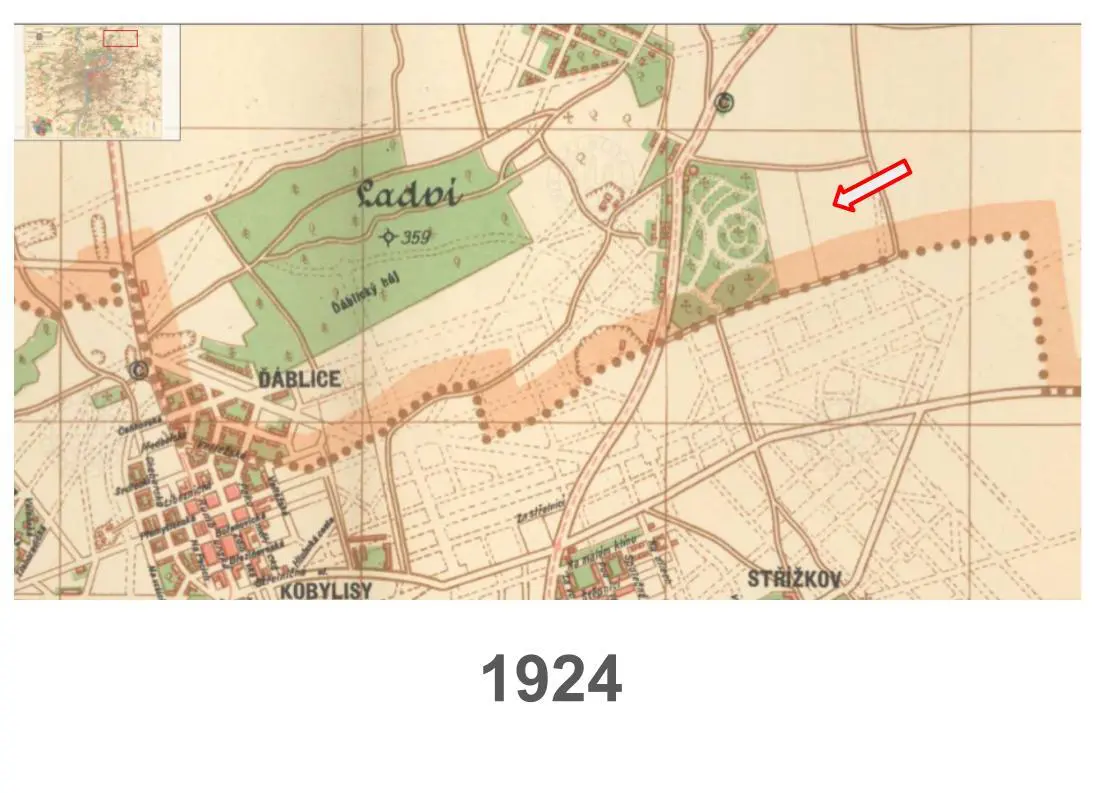
From the very beginning, this nursery has been bound up with the care of Prague’s public greenery. For many years it formed part of the Sady, lesy, zahradnictví Praha enterprise; today it is one of the centres of Lesy hl. m. Prahy, established by Prague City Hall.
In 1935–36 a Parks Department was created within the building authority of Prague City Hall, and the Ďáblice nursery expanded onto further land behind the cemetery. It now covers 15 hectares, 6 of which are production area.
The founding gardener
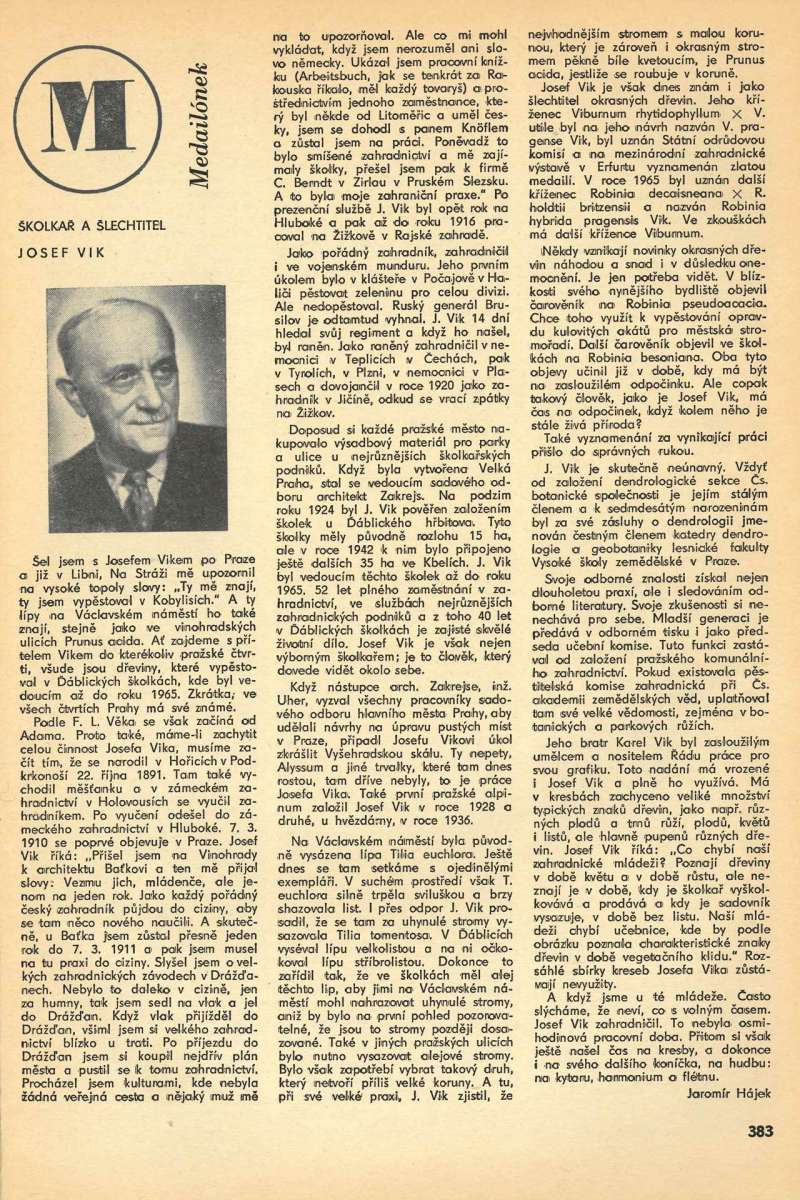
The history of the Ďáblice nurseries was shaped above all by the highly successful plant breeder Josef Vik, who founded them in 1924 and then worked here for another 40 years. He bred new plant varieties, grew trees for planting across the city and in doing so influenced the face of Prague’s greenery.
So who was Josef Vik? He was born in 1891 in Hořice in the Podkrkonoší region. He trained as an orchardist and gardener, then went to work at the Schwarzenberg estate gardens in Hluboká nad Vltavou. By 1910 he had moved to Prague, to the then chief municipal gardener and garden architect Leopold Baťka. A year later he went abroad to gain experience, first at a nursery in Dresden and later in Prussian Silesia. After military service he returned to Hluboká and then to the Rajská zahrada gardens in Prague’s Žižkov.
In 1924 the head of the municipal parks department, the architect V. Zakrejs, entrusted him with establishing a new ornamental nursery and supply garden on unused land next to the Ďáblice Cemetery. That is where the history of the Ďáblice garden centre begins. Josef Vik even lived on site; in 1936 he moved with his family into a house within the grounds. He worked here almost until his death in 1968.
He influenced not only the garden centre but Prague itself. In the capital he created several rock gardens, planted the Vyšehrad rock with perennials and gradually replaced the limes on Wenceslas Square — earlier planted by František Josef Thomayer, which had struggled there — with a different species. To support this he established an avenue of reserve trees in Ďáblice, so that semi-mature trees could be planted into the city’s tree lines.
Bred in Prague: Viburnum pragense and other new varieties
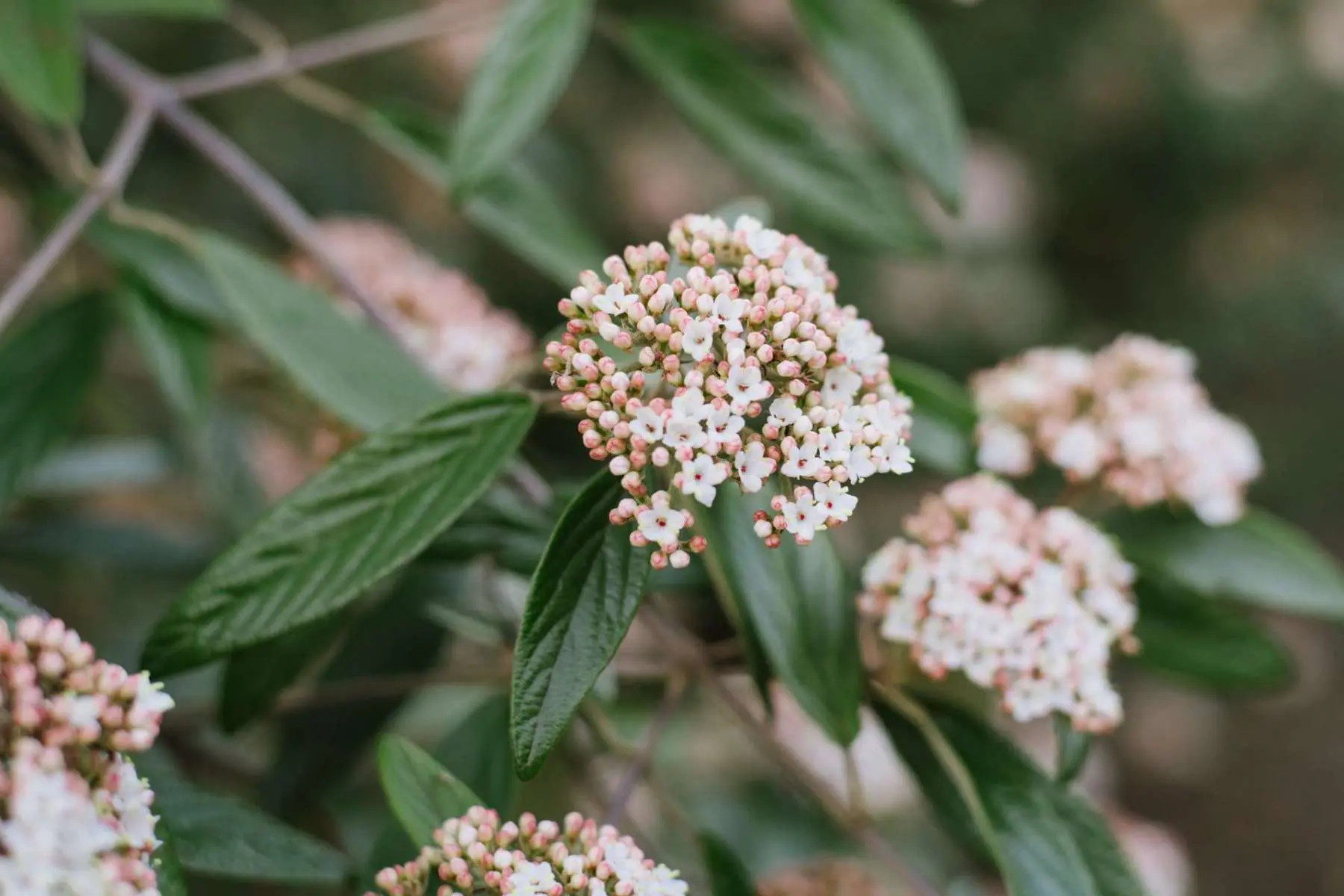
Josef Vik also bred the well-known Viburnum pragense. He successfully crossed two Chinese viburnum species and produced a new variety of this evergreen shrub, which stood out for how fast it grew and how well it withstood both drought and frost. Because such a shrub had first grown in Prague, Vik proposed the name Viburnum pragense. As a hybrid of Viburnum rhytidophyllum and Viburnum utile, it was entered in the national register of approved varieties in 1959.
Josef Vik described the discovery in an article from 1960: “In experimental crossing I obtained, after pollination (from Viburnum utile), seed from Viburnum rhytidophyllum, which I sowed in the autumn. The following spring about six seedlings emerged which, apart from one, showed the characteristics of Viburnum rhytidophyllum. That single plant began to differ by growing faster than the others, which grew far more slowly. From this seedling I obtained a number of plants which, on further propagation, proved absolutely constant and unchanging in their properties.”
From the parent viburnum it took the characteristic leaf shape; from Viburnum rhytidophyllum it inherited larger leaves with a felted underside, a taller habit overall and, above all, good frost resistance. Cuttings were taken from the original Ďáblice specimen and the plant was propagated step by step. It was soon planted “for observation” at the arboretum of the Slovak Academy of Sciences, in the Lednice park and at Průhonice, and gradually spread abroad as well. The garden centre’s diary from 1961 records one interesting cross-border exchange: cuttings of Viburnum pragense went to Poland in exchange for the Warsaw lime.
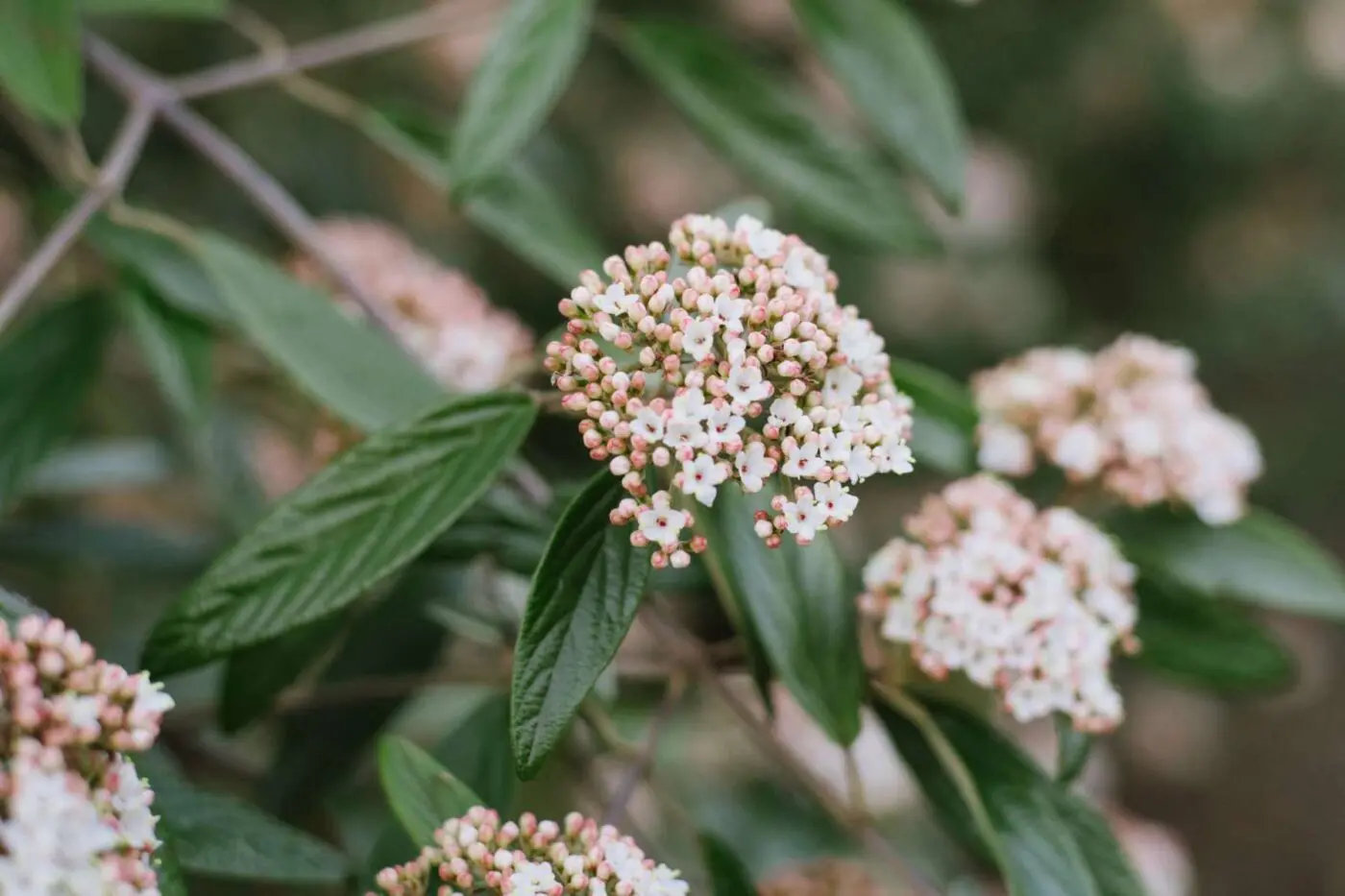
In 1964 the Robinia x pragense, also bred by Josef Vik, was entered in the register of approved varieties. It is an upright-growing tree with white, faintly pink-tinged flowers.
In later years the Ďáblice nursery bred, among others, the spruces Picea omorika „Alexandra“ and Picea abies „Praha“, and Thuja occidentalis „Spiralis Compacta“. These breeding successes, however, are mostly known only to specialists.
The Kbely land
The Kbely land (the former Kbely garden centre) was attached to the already established Ďáblice nursery in 1940. But while the Ďáblice nursery has a long and, above all, unbroken history, Prague had to litigate over the Kbely nurseries with the Land Court after 1992. Their operation was halted for roughly eight years. The ornamental nursery at Kbely then ran until the end of 2015 and the shop closed on 1 January 2016; on the site, Lesy hl. m. Prahy built new facilities for environmental education for schools in this north-eastern part of Prague — Ecocenter Prales.
Plants for Prague, grown in Prague
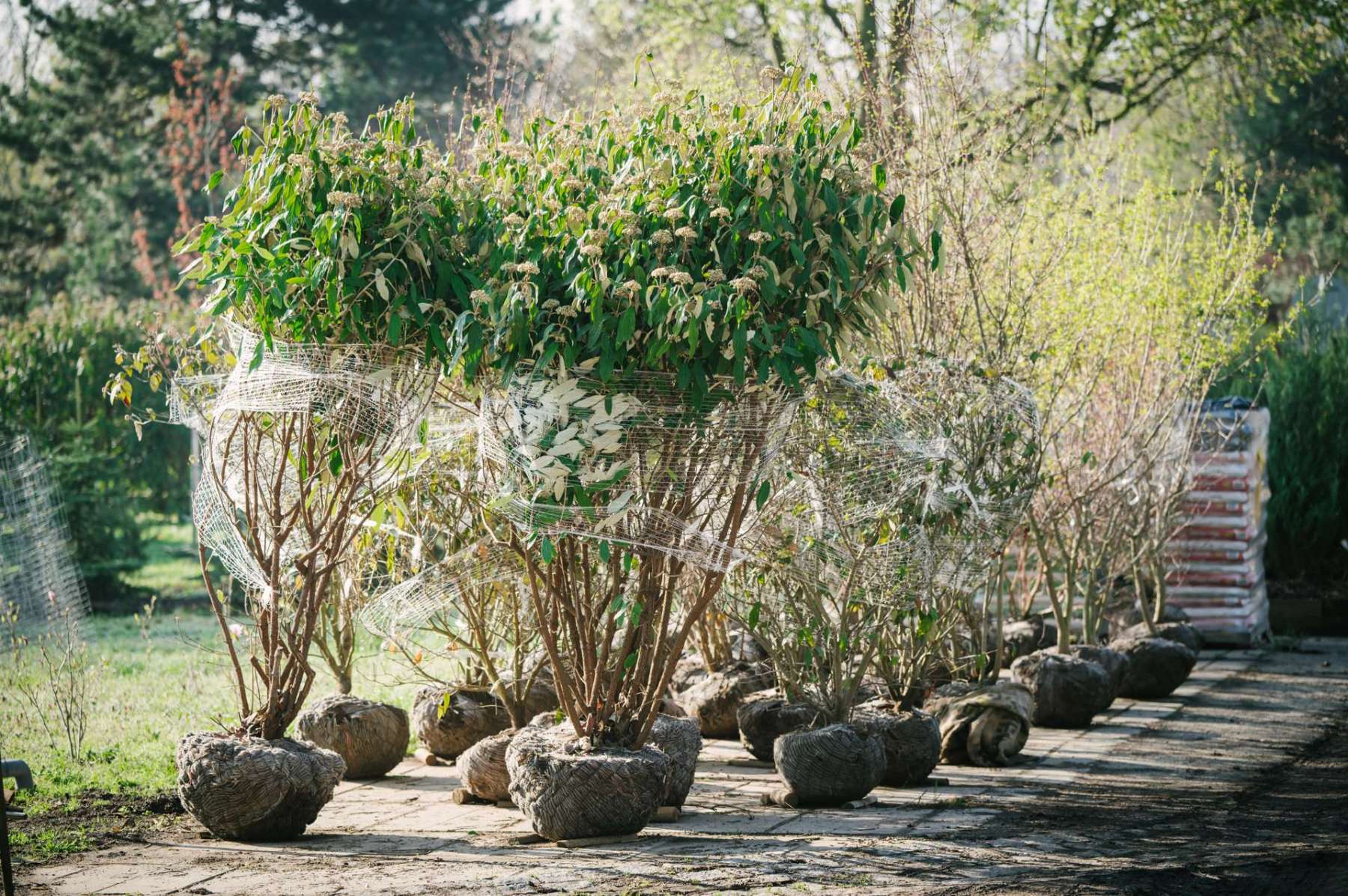
Prague’s ornamental nurseries give the city a way to manage its resources efficiently and to grow the plants it needs right where they will later be planted, minimising the risk that plants unaccustomed to the local climate and soil will struggle. They supply planting for the city’s parks, from which many traditionally planted species gradually disappeared over the past sixty years. Lesy hl. m. Prahy is now working to bring those traditional plants — among them hydrangeas, peonies and some evergreen broadleaves — back into Prague’s greenery. Besides park planting, the ornamental nurseries can also supply material for tree avenues, biocorridors and other green areas.